Last updated November 21, 2026
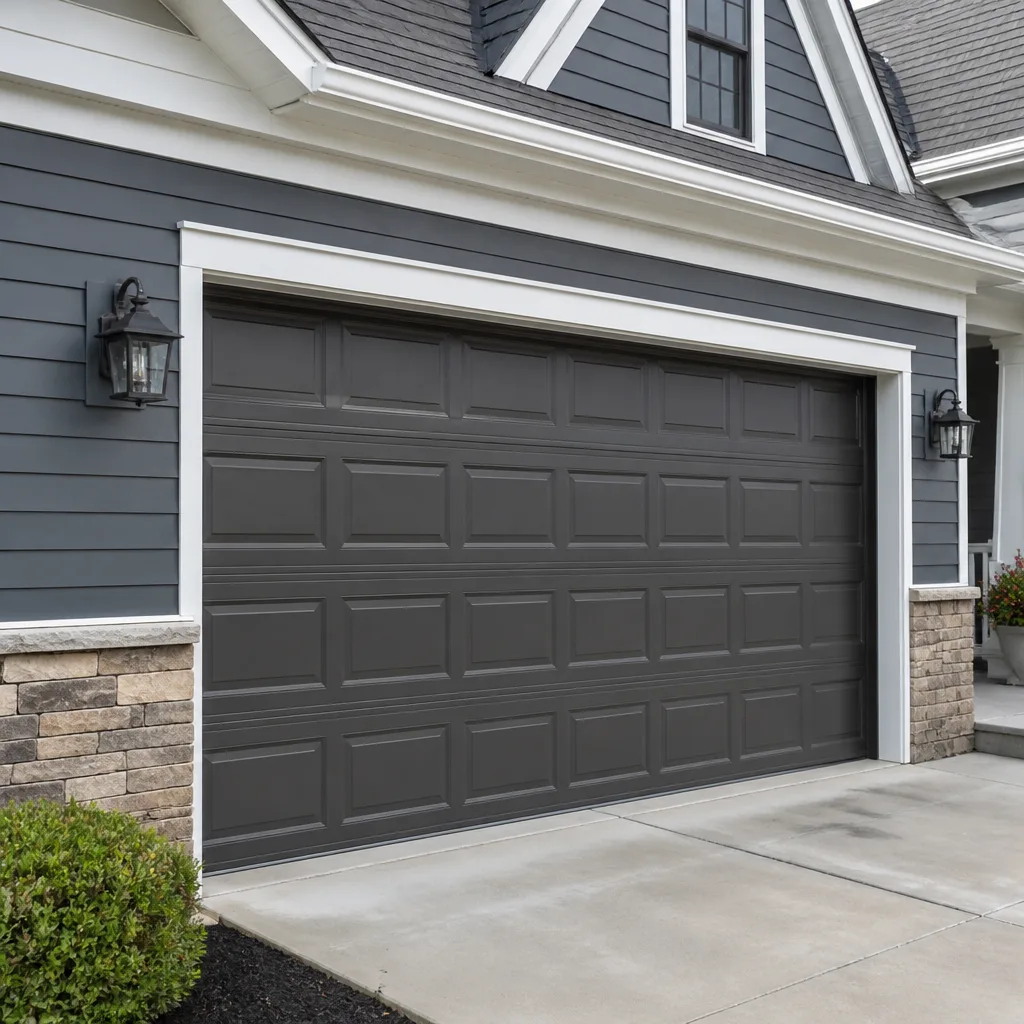 Raised-panel steel
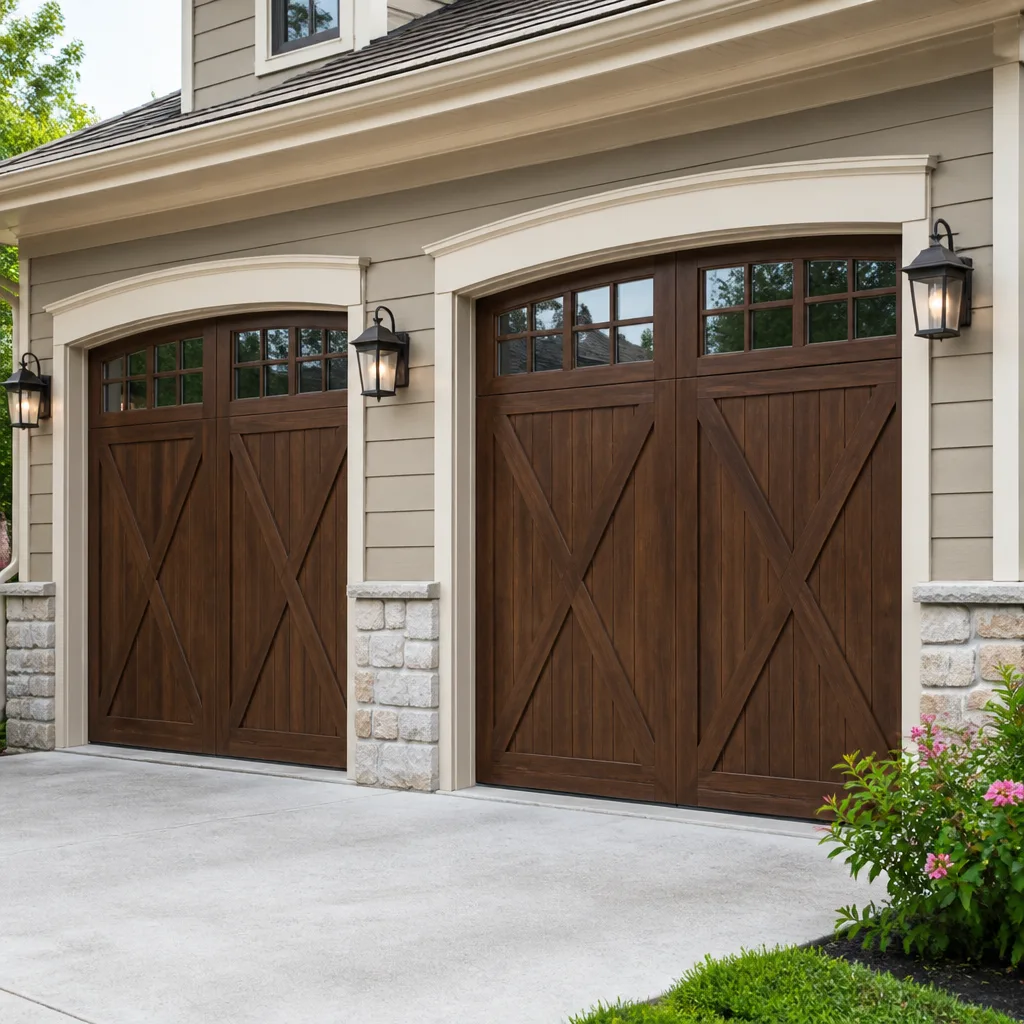 Carriage house
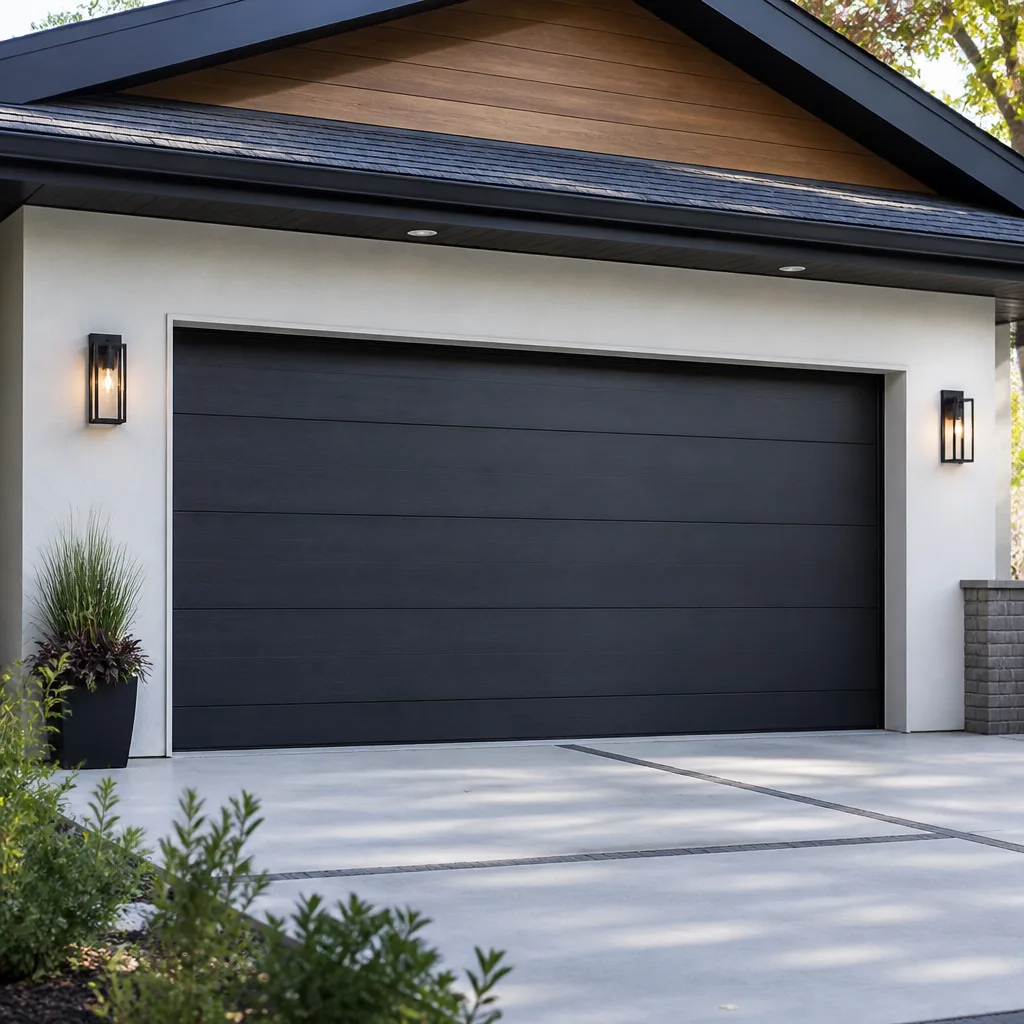 Modern flush
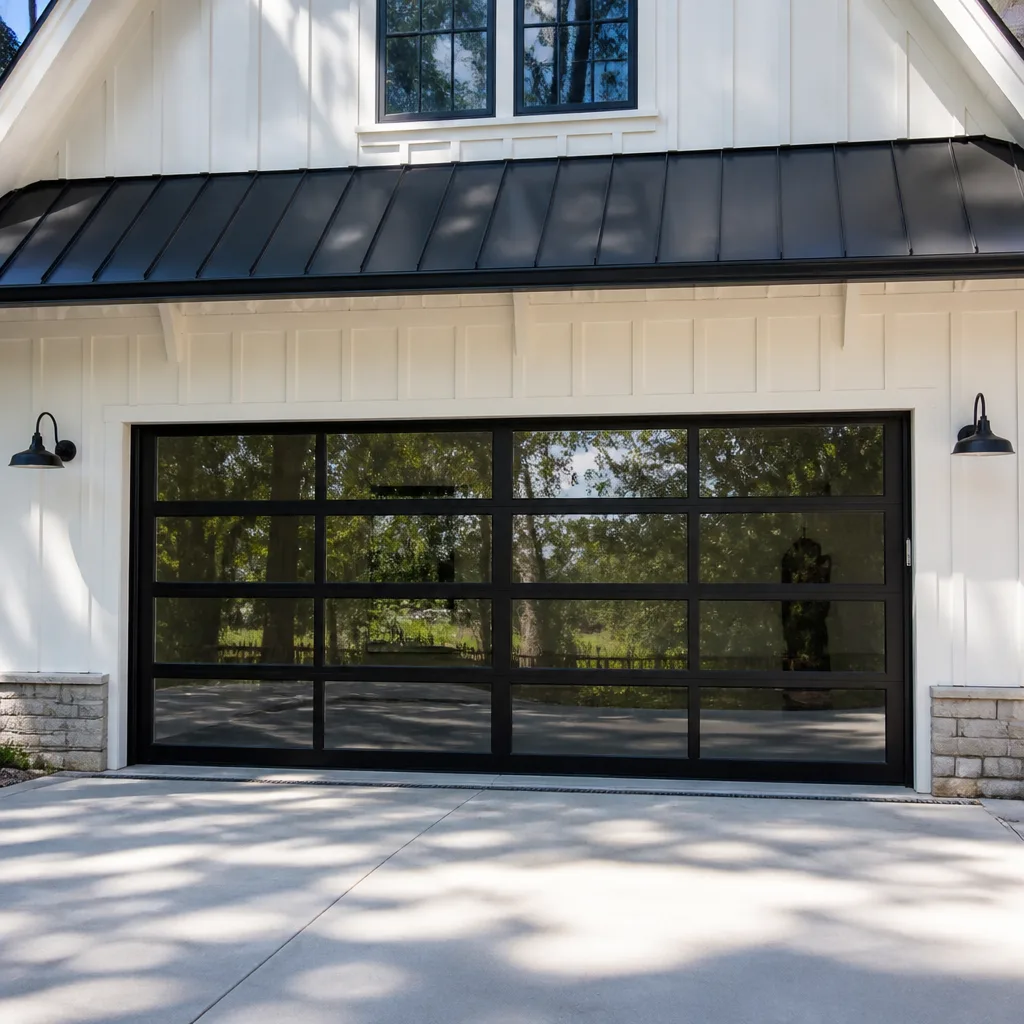 Full-view glass
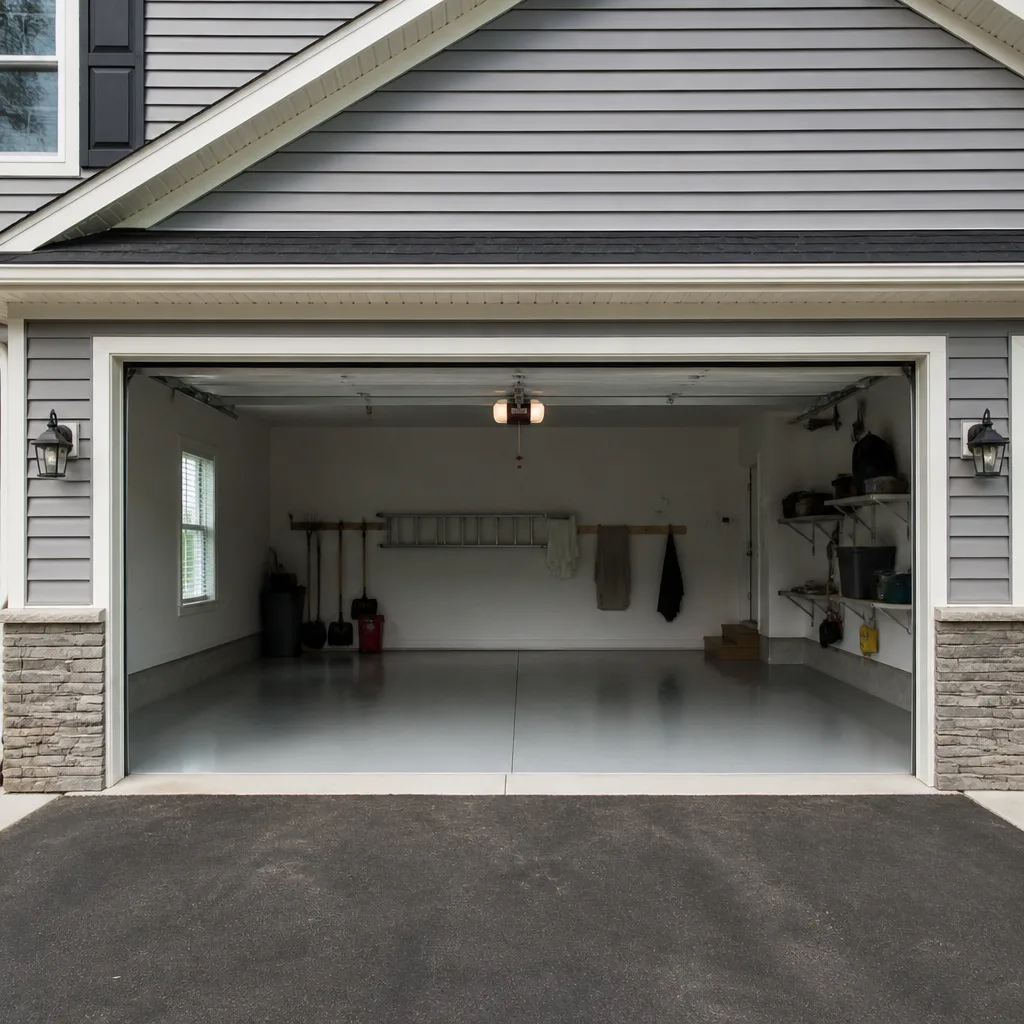 LiftMaster openers
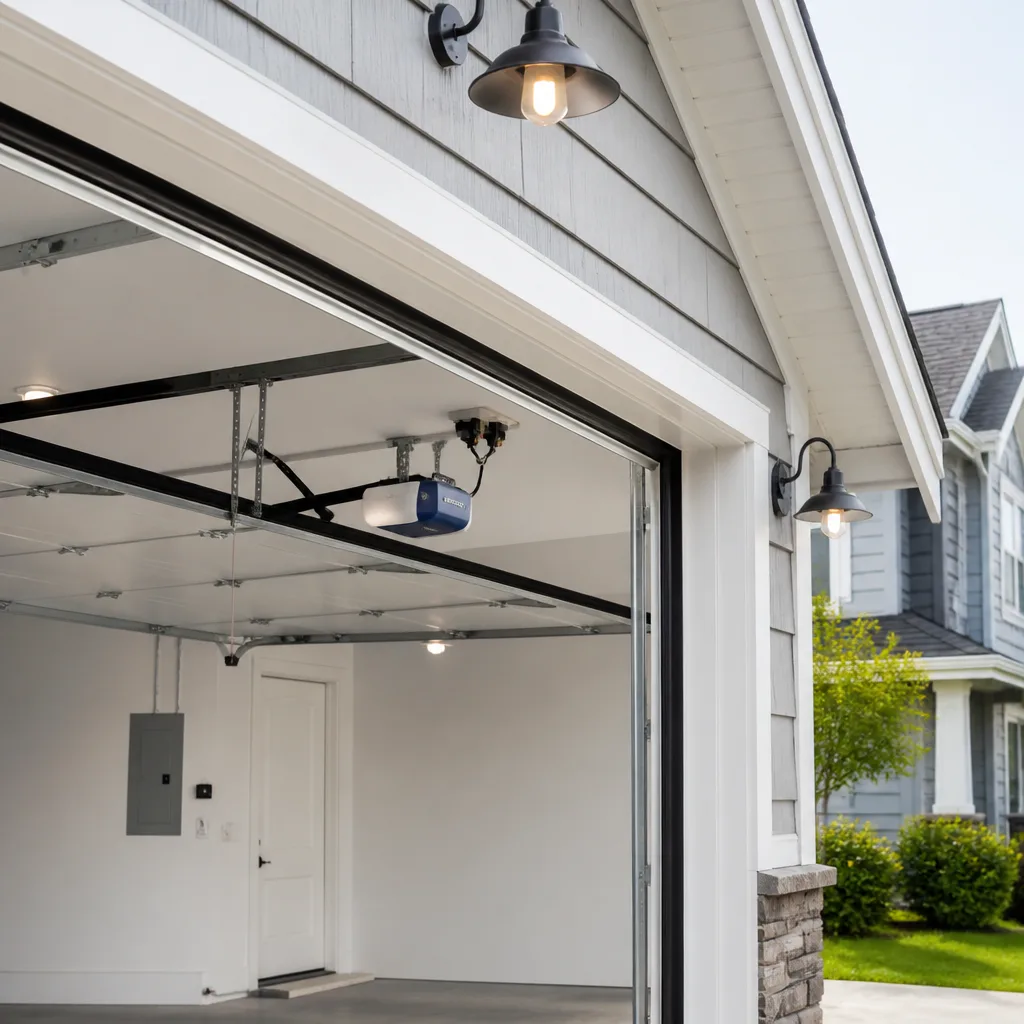 Chamberlain openers
Full 25-point door and opener safety check with every visit - springs, cables, rollers, tracks, and your LiftMaster or Chamberlain opener included
You get a price before we start. It does not change when the pro arrives.
Get your free estimateThe Complete Guide to Garage Doors in Holmesburg
Most Holmesburg garages were built when a 7-foot door was considered generous, and that single fact eliminates roughly half the doors on the market before you even start shopping. It’s not a sales problem – it’s a math problem. Headroom, side clearance, track mounting, and the concrete pad all set limits on what a Holmesburg garage can actually take, and those limits were poured decades before anyone designed a quiet belt-drive opener. This guide walks through the housing stock, the weather exposure, the hardware you’ll find inside an older door, the permit questions that come up on shared alleys, and how to decide between repair and replacement. If you’ve ever stood in a narrow Holmesburg driveway wondering whether a new door will even fit, this is written for you.
Quick Answer
A garage door in Holmesburg is usually a 7-foot to 8-foot wide sectional or tilt-up door sized to a pre-1960s opening, and the biggest constraint on any replacement isn’t style or budget – it’s headroom, side-room, and track clearance. Measure your opening, note the ceiling height above the door and the space beside the opening before you shop, and match the door and opener to those numbers. Repair versus replacement usually comes down to spring and panel condition plus hardware age, and a specialist can tell you which makes sense on the first visit.
Styles & brands we work with
- Raised-panel steel
- Carriage house
- Modern flush
- Full-view glass
- LiftMaster openers
- Chamberlain openers
Table of Contents
- Why Holmesburg’s Housing Stock Shapes Every Door Decision
- What Holmesburg Weather Does to Doors and Concrete
- Door Styles and Materials That Hold Up Here
- Low-Headroom Conversions and Brand Compatibility
- How to Read the Hardware on an Existing Door
- Permit Triggers and Shared Alleys in Philadelphia County
- Repair or Replace? How to Decide
- Common Mistakes to Avoid
Why Holmesburg’s Housing Stock Shapes Every Door Decision
Holmesburg grew up as a neighborhood of rowhouses and tightly packed single homes, and the garages that came with them reflect the lot lines of that era. Many detached garages sit at the back of a narrow driveway, tucked behind a main house, with only feet of clearance on either side of the opening. Inside those garages, ceiling joists often sit low, and the concrete slab has settled in places. Every one of those details matters when you’re shopping for a new door or opting for garage door installation, and none of them show up in a standard product brochure.
Here’s what we typically see in older Holmesburg garages:
- Narrow side-room: The space beside the opening is often too tight for standard torsion bars or wide tracks, forcing custom brackets or a redesign of the mounting.
- Low headroom: Ceiling joists frequently sit below what a modern sectional door needs for its horizontal track run.
- Small openings: A 7-foot door may measure closer to 6-foot-8 or 7-foot exactly, which limits ready-made sizes.
- Uneven pads: Damp slabs with settled spots throw off door balance and seal contact at the floor.
- Alley-facing garages: Doors opening onto a back alley need to swing and track with no margin for error.
The practical upshot is that a Holmesburg homeowner can’t assume a standard off-the-shelf door will fit. A measure-first approach, using the actual numbers from your opening, saves the cost of returning a door that looked fine online. If a repair is the smarter call, our Garage Door Repair Holmesburg page explains what we usually see on the first visit.
What Holmesburg Weather Does to Doors and Concrete
A door in Holmesburg faces northeast-facing lots that catch morning damp and afternoon shade, plus summer heat that builds against the inside of a south- or west-facing door. Paint chalks. Wood sections swell at the bottom rail. Steel panels that didn’t get a factory finish coat start to show surface rust along the lower hinges. None of this is dramatic – it’s slow, ordinary wear – but it’s the kind of wear that decides which materials hold up and which ones don’t.
The bigger factor most homeowners overlook is the concrete pad. In older Holmesburg garages the pad is often original, poured before modern vapor barriers became common. That means the slab holds moisture, the bottom weather seal stays damp, and wood or unlaminated steel at the floor line ages faster than the rest of the door. The fix isn’t complicated: a quality bottom seal, a bit of separation between the door’s lower rail and the concrete, and periodic checking on the sill.
- Northeast-facing lots: More shade and lingering damp means longer wet time on the door face and bottom rail.
- Summer urban heat: A south- or west-facing door radiated back at the driveway runs hotter, which stresses paint and vinyl skins.
- Damp concrete pads: The bottom seal and lower panels take the worst of it, so inspect the seal a couple of times a year.
- Freeze-thaw at the sill: Ice can build where the seal meets the pad, so keep the bottom weatherstrip in good shape before winter.
In our experience, the material that survives Holmesburg best is a factory-finished steel door with a proper bottom seal and a rust-resistant lower panel. Wood doors look great on a period-appropriate home, but they need regular attention. Clopay and Amarr both offer steel and composite doors in sizes that adapt well to older openings, which we reference again below.
Door Styles and Materials That Hold Up Here
The right door for a Holmesburg home starts with the opening dimensions, then works backward to style. If you have 6-foot-8 of ceiling clearance and 3 inches of side-room on each side, a standard raised-panel sectional may not fit, but a low-headroom conversion or a tilt-up door might. That eliminates half the catalog before aesthetics even enter the conversation.
The style families that work in Holmesburg break down like this:
- Raised-panel steel sectional: The most practical option for most Holmesburg homes – durable, low-maintenance, and available in custom widths. Factory painting or a powder-coat finish holds up well against the damp.
- Flush or ribbed steel sectional: A cleaner look for modernized homes, often cheaper, and easier to seal at the bottom edge.
- Composite wood-look doors: Get the wood appearance without the swelling and repainting. Good for period homes along the residential streets where a painted wood door would look out of place.
- Tilt-up single-panel doors: Found on some older detached garages; they use different hardware and don’t need horizontal track, so they can fit a low-headroom space a sectional can’t.
A word on insulation: on a northeast-facing lot you’ll notice the difference more in the winter, when a well-insulated door holds back the cold and helps prevent the door from becoming a cold surface for damp to condense on. That’s not a dramatic upgrade, but it’s a practical one. A door that stays dry lasts longer, and the seal at the bottom does its job better.
Low-Headroom Conversions and Brand Compatibility
Low-headroom conversions are the most common change we make on older Holmesburg garages, and they’re also where brand compatibility matters most. When there’s not enough ceiling height for a standard horizontal track, the fix is usually a low-headroom kit that drops the track to a lower pivot near the ceiling joists and uses a torsion spring mounted at the header. That conversion changes how the opener connects, and it changes which openers work well.
What we see in Holmesburg older garages:
- A torsion spring at the header rather than above the door, which frees up the low ceiling joists.
- Short track radius and a low-profile top roller that clear the joist line.
- Openers that work with a low ceiling – belt-drive or jackshaft openers are common choices, depending on the geometry.
- Manual release hardware kept clear and reachable, which matters in a tight space.
Brand fluency makes a real difference here. We work on LiftMaster, Chamberlain, Genie, Clopay, Amarr, Wayne Dalton, Craftsman, and Raynor systems specifically – not just garage doors in general – so we know how each opener’s rail, photo-eye, and force settings behave with a low-headroom setup. A Chamberlain or Genie opener that’s fine on a standard tract home may need a different mount or limit adjustment on a Holmesburg garage with a low ceiling and a header-mounted torsion spring. If your opener is failing in one of these setups, our garage door opener repair page covers what we check.
How to Read the Hardware on an Existing Door
Before deciding what to upgrade, look at what’s already there. A door’s hardware tells you its generation, what’s compatible, and what a specialist would recommend replacing versus keeping. You don’t have to do the repair yourself – in fact, on torsion springs and cables you should never try – but reading the hardware helps you ask better questions and understand the quote you’re given.
Start with the door itself:
- Count the panels and note the width. A four-panel door at 7 feet tall is an older standard; newer doors often come in three or five panels.
- Check the spring type. A horizontal spring running across the header above the door is a torsion spring. A spring running along each side of the vertical track is an extension spring. Torsion is more common on heavier doors; extension on lighter or older ones.
- Look at the track. Standard horizontal track runs the rail back into the garage; a low-headroom setup has a shorter, dropped run. Note whether the vertical tracks are bolted to a wooden jamb or a steel frame.
- Inspect the hinges and rollers. Nylon rollers and stamped hinges are the common domestic setup; sealed bearings and heavier hinges suggest a heavier duty door.
- Check the opener rail and head. A chain-drive opener with a steel rail is older; a belt-drive with a quieter rail is modern. Note the brand plate on the opener housing.
This is exactly where specialist training matters. Torsion spring work is the highest-risk repair in the trade – a wound torsion spring stores enough force to cause serious injury – so a professional does that work with the right winding bars and safety procedures, not a DIY shortcut. Whether you’re facing a snapped spring or a door that won’t lift, our garage door repair page describes what a typical service visit looks like.
Permit Triggers and Shared Alleys in Philadelphia County
Permit rules for garage doors can be confusing because the trigger isn’t always obvious. In Philadelphia County, replacing a door on a garage that faces an alley or shares an easement can involve more than a door swap, and the city’s rules on structural changes don’t always map neatly onto a simple replacement. We can’t tell you whether your specific job needs a permit – only the city’s building department can – but we can tell you the questions to ask.
Here’s a practical checklist when you’re planning a replacement on a Holmesburg property with alley access or a shared easement:
- Confirm with the city’s building department whether a door replacement in your use category triggers a permit – some replacements do, some don’t, and the answer depends on how they classify the work.
- Check your deed or title for any easement terms that restrict what you can change on the garage face, since a shared alley can carry access rights that affect what you build.
- Note whether the garage wall is load-bearing – if it is, removing and replacing the opening may require a permit even when the door itself is a like-for-like swap.
- Ask about setback or alley clearance requirements if the door’s swing or track needs to extend into the easement.
- Keep copies of what you file or receive from the city so a future buyer’s inspection doesn’t become a surprise.
This is a paperwork question, not a garage door question, and it’s the one place we always point homeowners to the city rather than guess. Ask the building department in writing if you can – a short email reply that confirms whether a permit applies is worth keeping. Once you know, a specialist can align the install plan to whatever the city requires.
Repair or Replace? How to Decide
Repair or replace comes down to three things: the door’s structural condition, the age of the hardware, and how the springs are holding up. A door that’s structurally sound with a single snapped spring is usually a repair. A door with rusting lower panels, failing hinges, and a track that’s pulled loose from the jamb is often a replacement. A specialist can tell the difference on the first visit and won’t push you toward a new door if a repair is the sensible call.
Rough cost structure – these are typical estimates for a Holmesburg garage, and the written estimate you receive sets the final price:
- Single torsion spring replacement: roughly $180-$340
- Matched pair of torsion springs: about twice the single-spring range, since a pair is usually replaced together
- Opener diagnosis and repair: typically $120-$260, depending on the brand and part
- Full door replacement: priced by door size, brand, and install complexity after a measure
- Low-headroom track conversion: priced by the kit and the carpentry needed
If a repair reveals a door that’s well past saving, one company handles the full lifecycle – repair, opener work, and installation – so you’re not starting over with a second contractor. When a new door does make sense, our garage door installation page walks through the measure, custom width, and install plan.
Common Mistakes to Avoid
- Buying a door before measuring. Holmesburg openings are often 6-foot-8 or 7-foot, and off-the-shelf doors may not fit. Measure the width, height, headroom, and side-room before you shop.
- Skipping the headroom check. A standard sectional needs clearance above the opening that many older Holmesburg garages don’t have. A low-headroom conversion is often the better choice than forcing a standard track.
- Assuming all openers work with a low-headroom setup. Not every opener handles the track and rail geometry of a converted older garage well, so match the opener to the setup, not the other way around.
- Attempting a spring repair yourself. A torsion spring stores enough force to cause serious injury. Spring work is a professional job with the right winding bars and procedures – not a DIY shortcut.
- Ignoring the concrete pad. Damp slabs and a worn bottom seal are behind much of the early wear on Holmesburg doors. Keep the sill and seal in good shape before winter.
- Skipping the permit question on an alley-facing property. A shared easement or alley access can add requirements to a straightforward door replacement, and the city’s building department is the one who’ll tell you for sure.
- Replacing on impulse before checking the hardware. Old but serviceable hardware and a single worn part can be a repair, not a new door. Look at the springs, hinges, and track before committing to a replacement.
See the difference
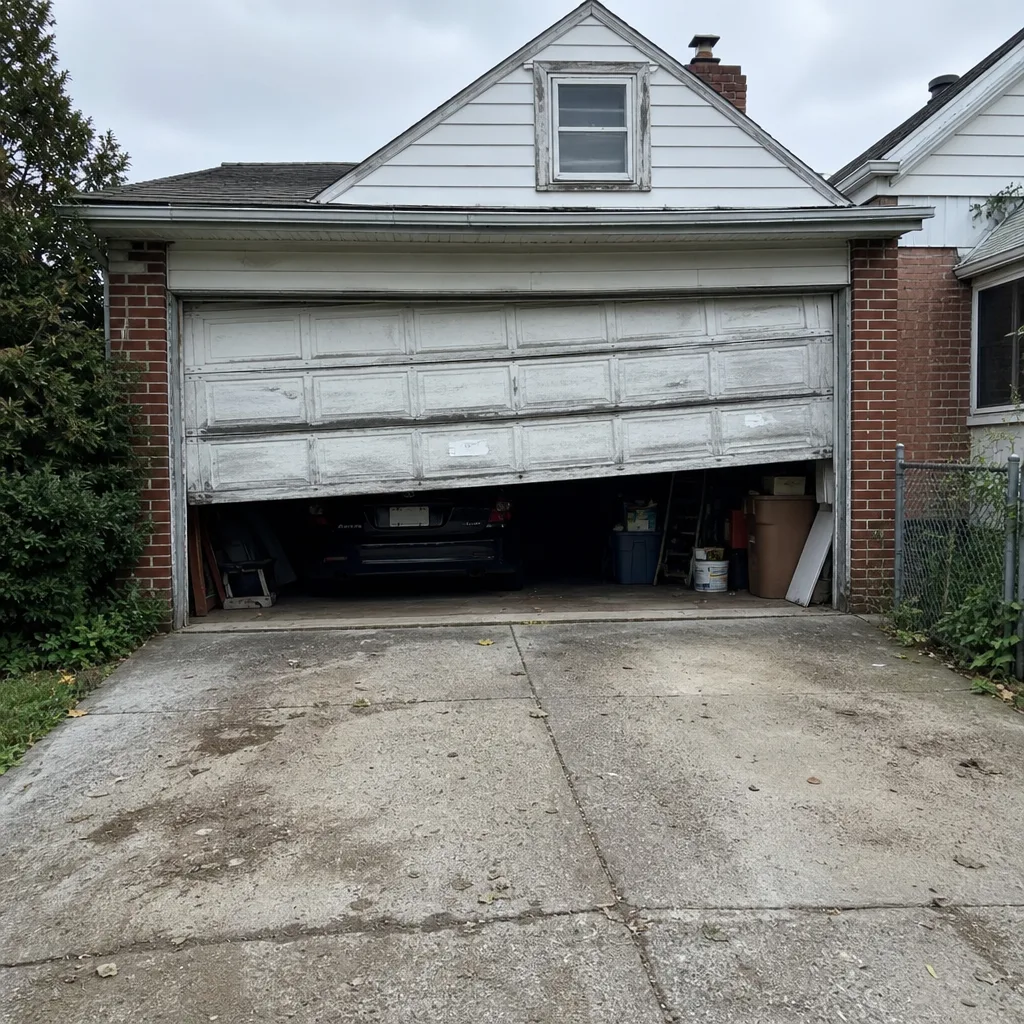 Before
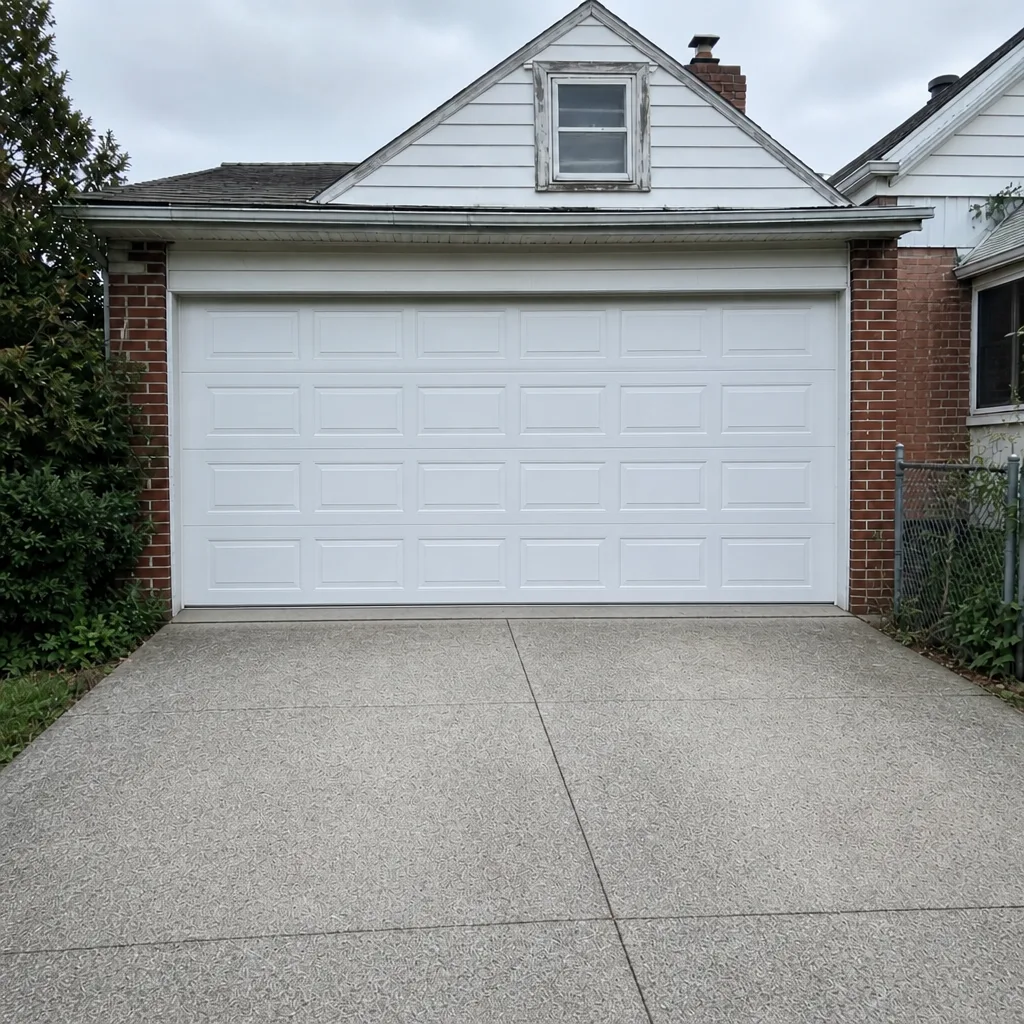 After
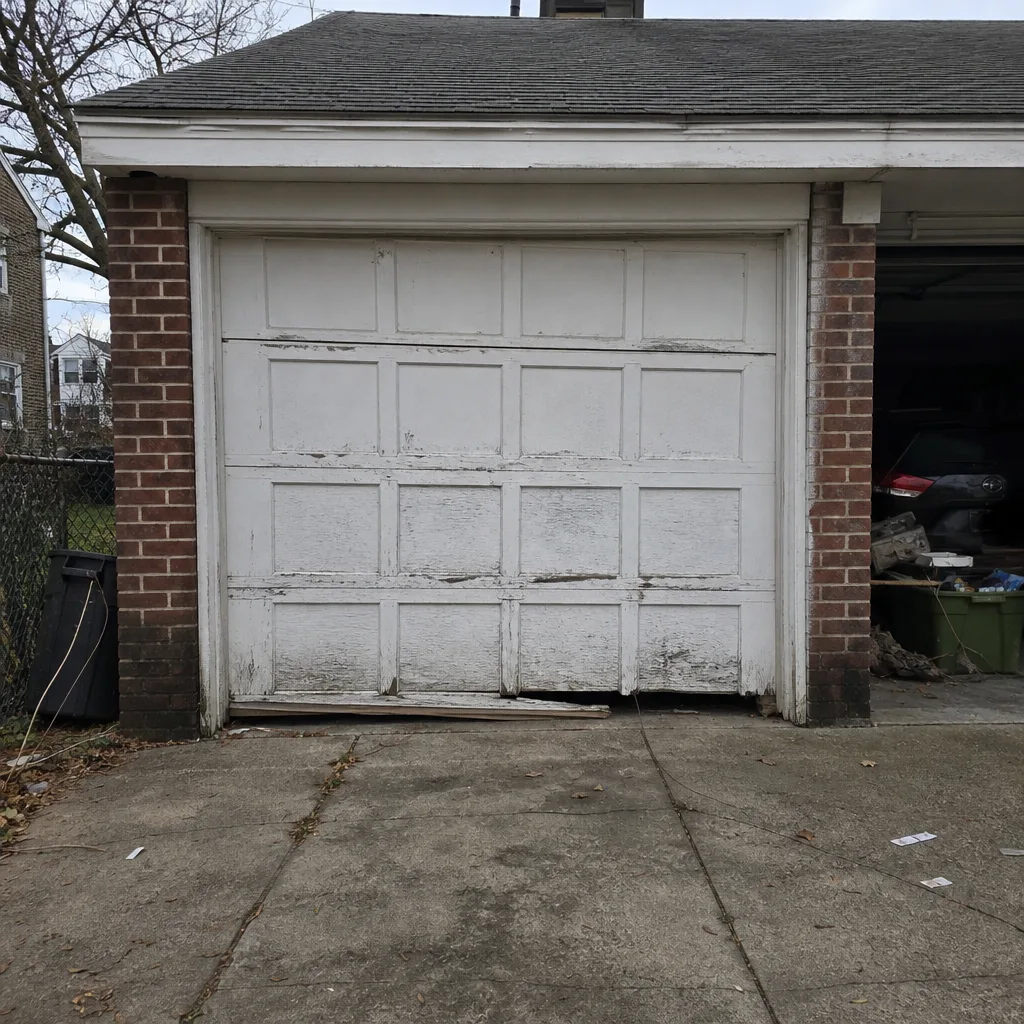 Before
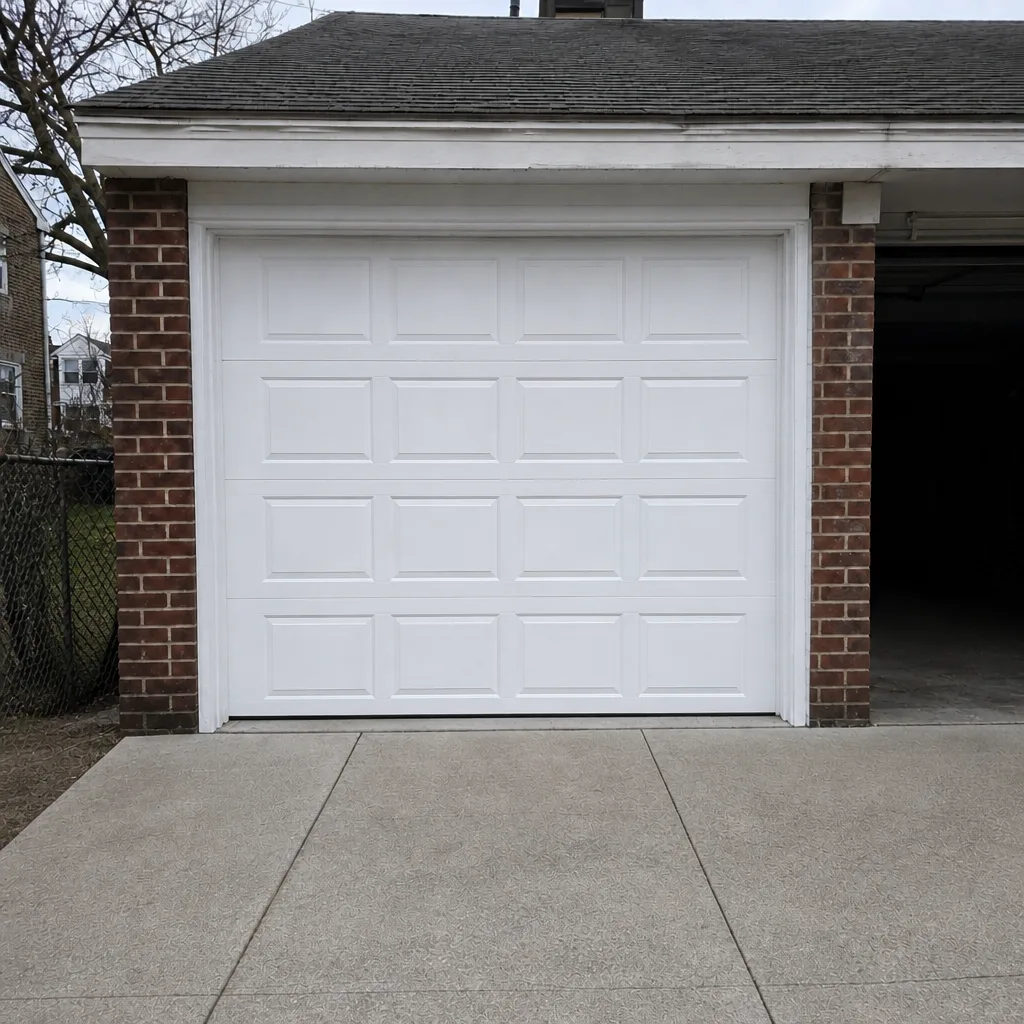 After
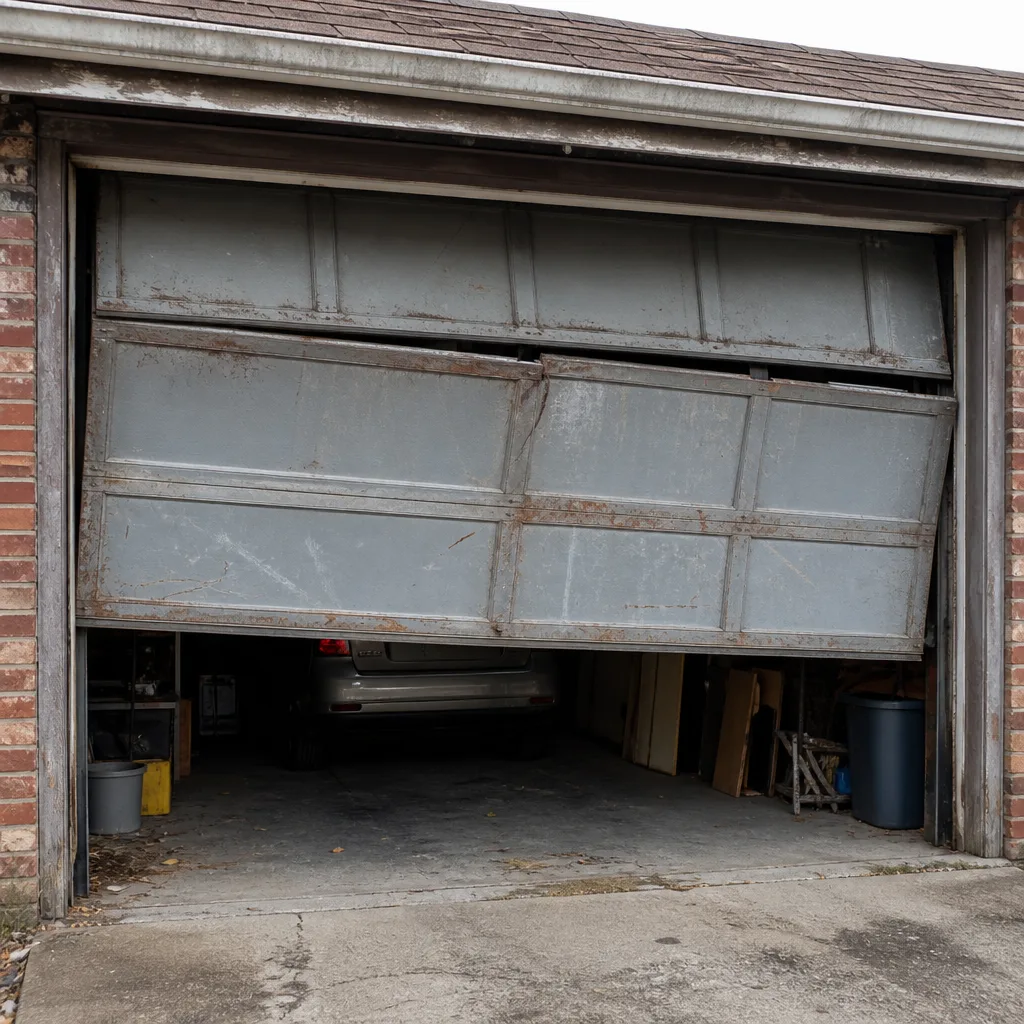 Before
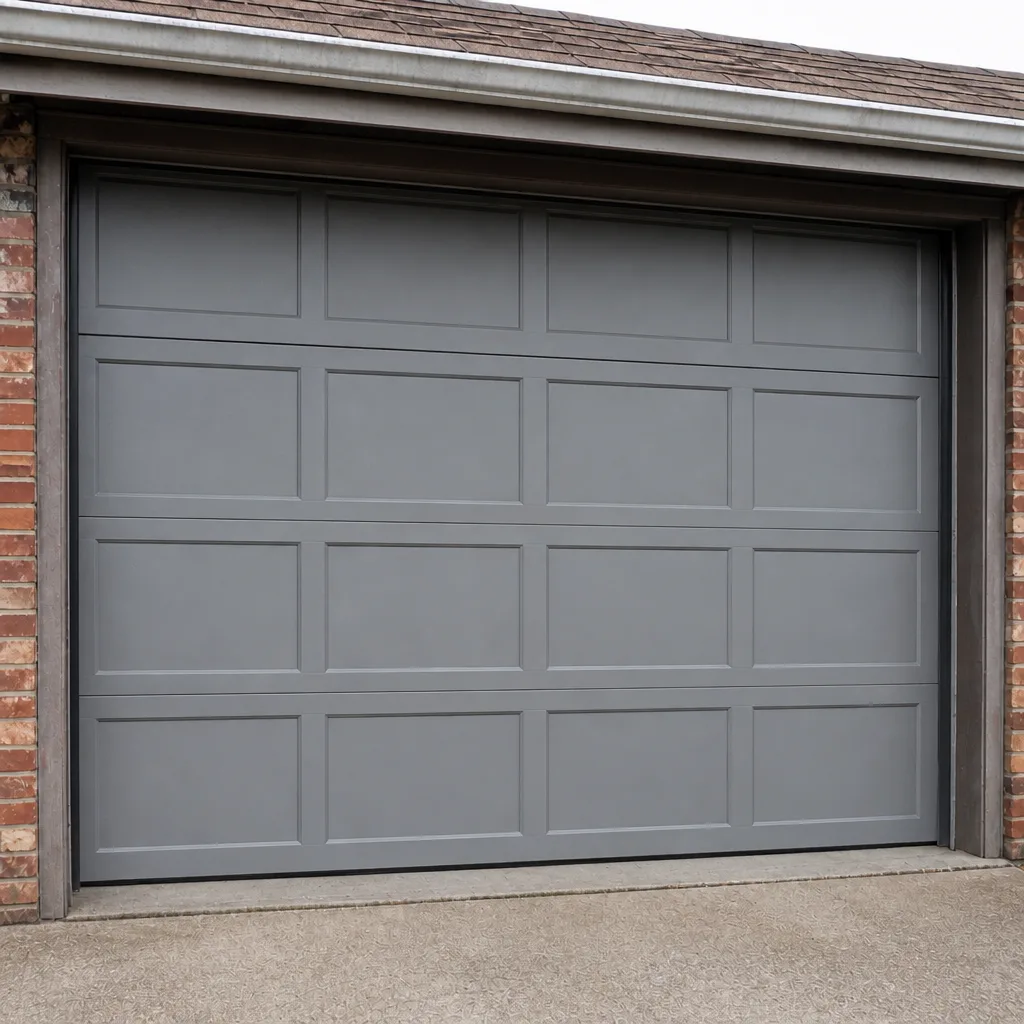 After
When to Call a Professional
Call a specialist when the door won’t open or close, when a spring snaps (you’ll usually hear it), when the opener runs but the door doesn’t move, when the door is visibly off its track, or when the bottom seal and sill are letting in daylight and damp. Any door that has to be forced at the handle is a call, not a chore. A specialist trained on torsion springs and the major opener brands can diagnose what’s wrong on the first visit, and we handle emergency garage door service because a stuck door doesn’t keep business hours. Garage Door Repair Holmesburg offers free estimates in Holmesburg – call (833) 509-3024.
Frequently Asked Questions
Most Holmesburg garages need a door sized to the existing opening – typically 7 or 8 feet wide and 6-foot-8 to 7 feet tall – with custom widths common on older homes. Measure the actual opening before shopping, because standard catalog sizes may not fit the narrower dimensions of pre-1960s garages.
Not always. A standard sectional needs a horizontal track run and ceiling clearance that many older Holmesburg garages don’t have, and the usual fix is a low-headroom conversion that drops the track to a lower pivot near the ceiling joists. A specialist can measure headroom and tell you whether a conversion, a tilt-up door, or a standard sectional is the right fit.
A single torsion spring replacement typically runs about $180-$340, and an opener repair about $120-$260, depending on the brand and part. Full door replacement is priced by size, brand, and install complexity after a measure, and the written estimate you receive sets the final price before any work starts. Call (833) 509-3024 for an exact quote – estimates are free.
It depends on the work and how the city classifies it, so ask Philadelphia’s building department directly. On a Holmesburg property with a shared easement or alley access, the easement terms can add questions too, so it pays to confirm with the city before ordering a door.
We work on LiftMaster, Chamberlain, Genie, Clopay, Amarr, Wayne Dalton, Craftsman, and Raynor systems specifically – not just garage doors in general. That range covers the major opener and door brands we see on Holmesburg garages, so we can diagnose the system that’s actually installed.
Check the springs (torsion or extension), the track (straight or pulled loose), the hinges and rollers (sealed or worn), and the lower panels (rusting or sound). If the door is structurally sound and the hardware is intact, a single repair often makes more sense than a replacement – and a specialist can tell you on the first visit which one actually makes sense for your situation.
The Bottom Line
Holmesburg garages were built for the era, and the doors that came with them reflect older standards for headroom, side clearance, and pad condition. The most important step before any purchase is measuring the opening – width, height, headroom, and side-room – because that single set of numbers eliminates half the catalog. Match the door and opener to the setup you actually have, keep the bottom seal and sill in good shape against the damp, confirm the permit question with the city on any alley-facing or easement property, and treat spring work as a professional job. Repair or replace, we’ll tell you which one actually makes sense for your situation. If you’d like a free estimate on a Holmesburg garage door, call (833) 509-3024.
Written by the team at Garage Door Repair Holmesburg.