Last updated November 21, 2026
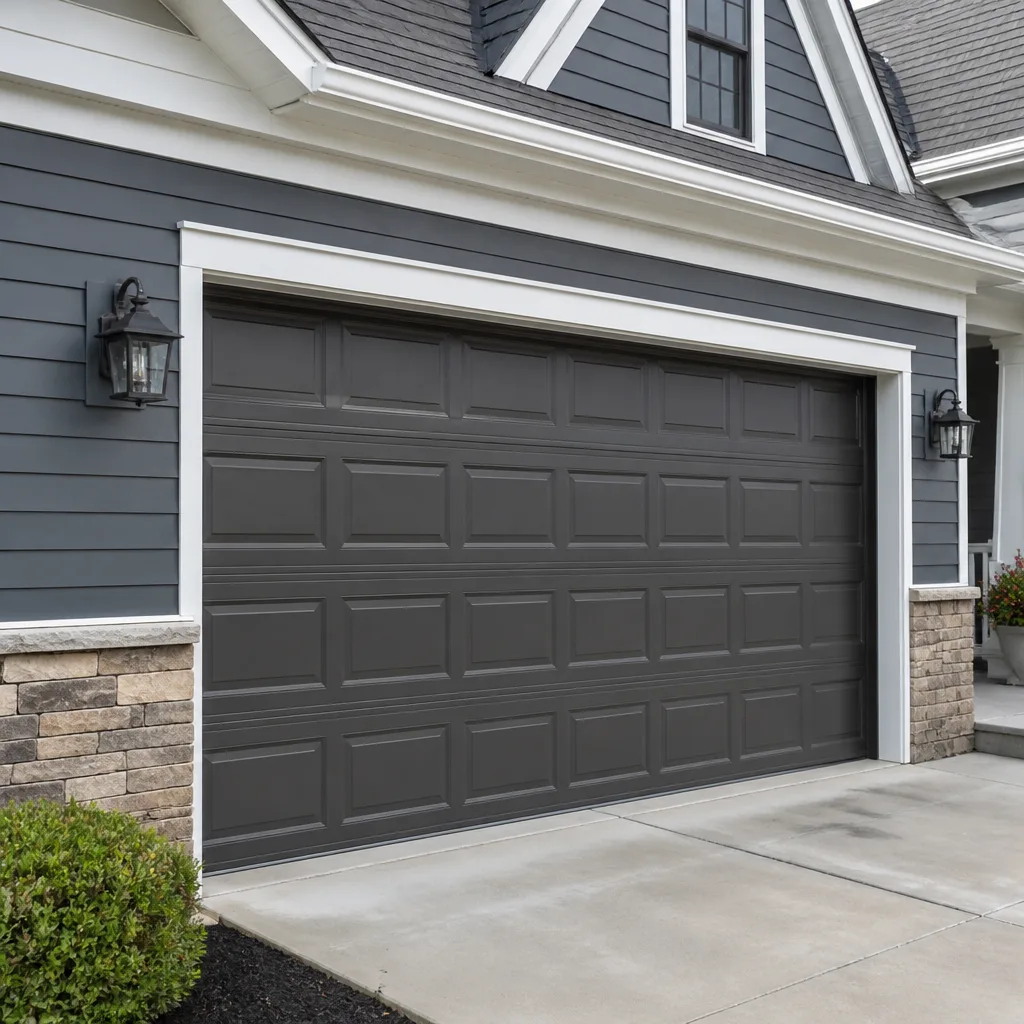 Raised-panel steel
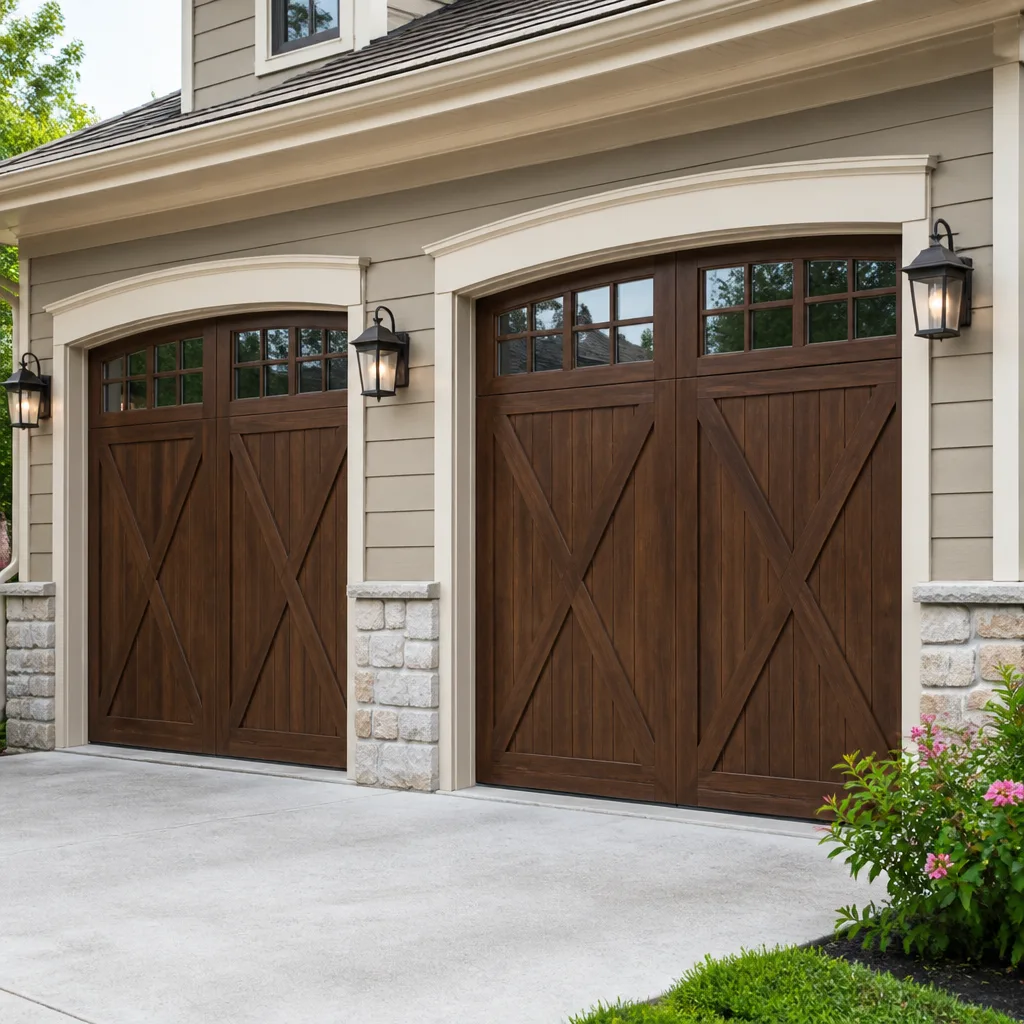 Carriage house
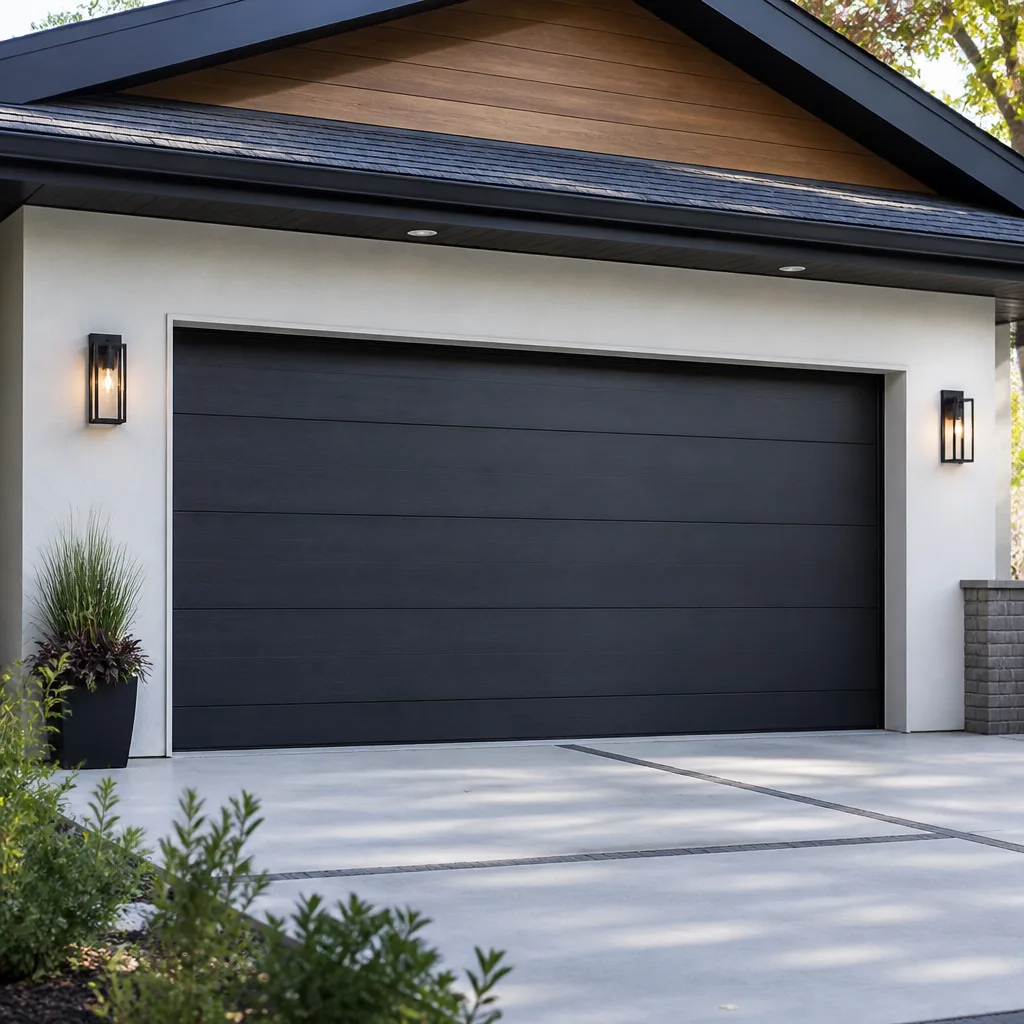 Modern flush
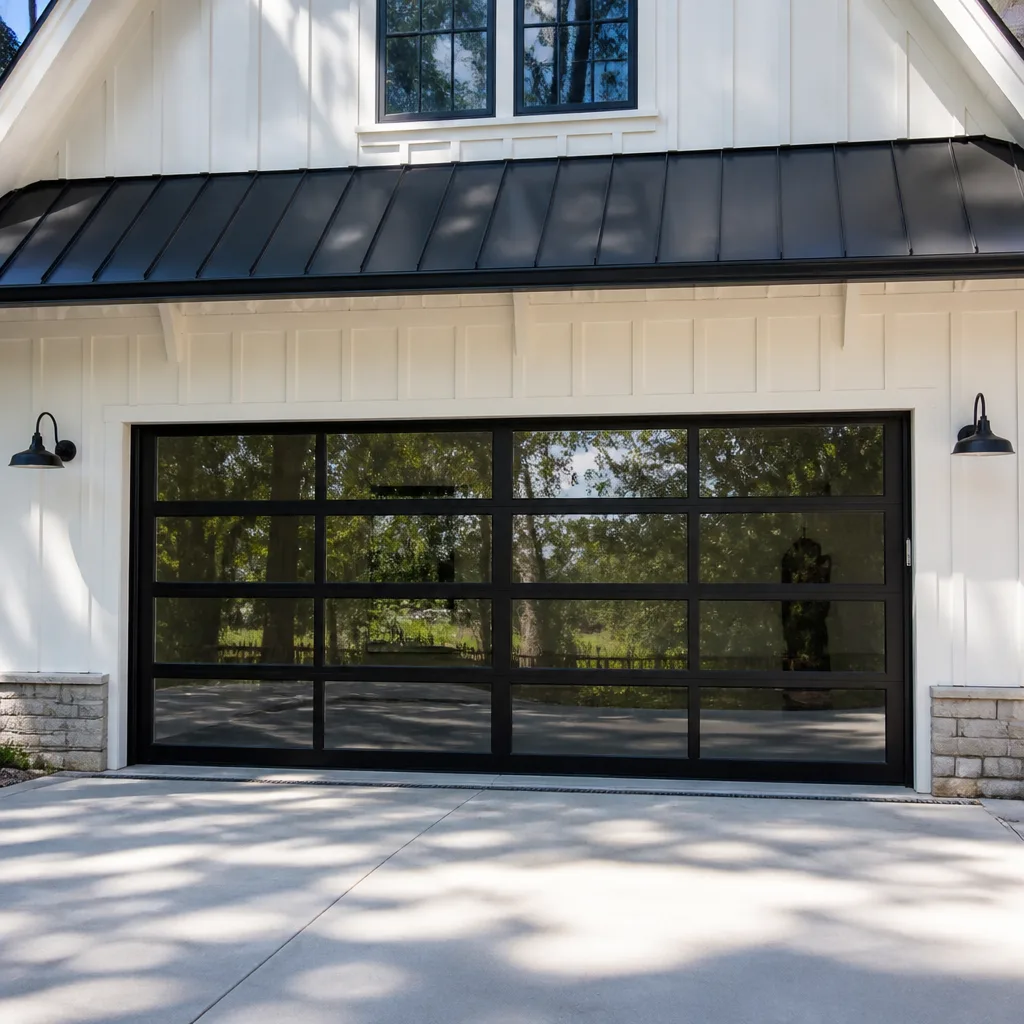 Full-view glass
 LiftMaster openers
 Chamberlain openers
Full 25-point door and opener safety check with every visit - springs, cables, rollers, tracks, and your LiftMaster or Chamberlain opener included
You get a price before we start. It does not change when the pro arrives.
Get your free estimateGarage Door Warning Signs: A Holmesburg Homeowner’s Reference Guide
Here’s the part most homeowners get wrong: the loud bang of a failing garage-door spring is almost never the warning. It’s the ending. In our experience, a torsion spring that’s close to snapping in a Holmesburg garage usually telegraphs the failure across the two weeks before it happens, and the clues show up as sound, hesitation, and a door that lifts at a slight angle. The problem isn’t a lack of signs. It’s that nobody’s told you what you’re hearing. This reference guide teaches you the diagnostic language of your door, the difference between wear you can ignore and wear that makes the door dangerous, and how to use it safely between the moment you notice something wrong and the moment a technician arrives.
Quick Answer
The most important garage door warning signs are a sharp popping or banging sound that means a spring is failing, uneven lifting or a visibly tilted door that points to a stretched or snapped cable, and an opener that travels slower or strains under a normal load. Any grinding, popping, or asymmetric movement means the door has moved from cosmetic wear into structural wear, and the safe next step is to stop operating it. If two or more of these signs show up together, schedule a technician before you run the door again.
Styles & brands we work with
- Raised-panel steel
- Carriage house
- Modern flush
- Full-view glass
- LiftMaster openers
- Chamberlain openers
Table of Contents
- Sound Diagnosis: What Grinding, Popping, Squealing, and Banging Are Telling You
- Visual Asymmetry: Reading Uneven Lifting, Canting, and Cable Slack
- Opener Behavior: When Slower Travel Means a Mechanical, Not Electrical, Problem
- Cosmetic Wear vs. Structural Wear: What to Ignore and What Makes a Door Dangerous
- Using a Door in Limp Mode: How to Operate Safely Before Repair
- Holmesburg Seasons and Garage Door Wear: How Heat, Cold, and Humidity Shift the Clues
- Brand-Specific Signals in LiftMaster and Wayne Dalton Systems
- Repair or Replace: How Warning Signs Help You Decide
Sound Diagnosis: What Grinding, Popping, Squealing, and Banging Are Telling You
The single most useful diagnostic tool you already own is your ears. A garage door has one motor, two springs, multiple hinges, rollers, drums, and a network of cables, and each one fails with a slightly different sound. Once you can tell the sounds apart, “something might be wrong” becomes “the hinge at the third panel is grinding,” and that change moves a homeowner from uneasy guessing to a specific, scheduled repair. Here’s the component-by-component breakdown.
Grinding
Grinding usually traces to the rollers or the hinges. Metal rollers running without lubrication, or a worn hinge that’s begun scraping against its neighbor, produce a low, continuous scrape that grows as the door moves. Grinding is one of the more forgiving sounds on the list, but it accelerates roller wear and, left long enough, can chew at the tracking.
Popping
A sharp pop, especially a single loud one that stops the door or makes it judder, is the highest-priority sound on this list. It usually points to a torsion spring that has shifted, a cable that has jumped its drum, or a hinge that has pulled loose from its mounting point. Popping is the sound homeowners should treat as a stop signal: don’t run the door again until a technician has looked at it.
Squealing
Squealing is friction. It almost always comes from dry rollers, a dry or misaligned torsion tube, or a hinge that needs lubrication. A squealing door isn’t failing yet, but it’s telling you the parts are running metal-on-metal somewhere, and the fix is usually a lubrication and adjustment visit rather than a full repair.
Banging
A banging sound at the start or end of travel usually means the door is slamming against its limits, or the spring has lost tension and is letting the door drop instead of easing it down. Banging is a tension problem, and a tension problem on a torsion spring is a warning sign worth acting on rather than waiting out.
Visual Asymmetry: Reading Uneven Lifting, Canting, and Cable Slack
Sounds tell you something is wrong. Sight tells you what. Watch the door through a full open and close from the side. A door that should rise as a single flat plane but visibly tilts toward one side is signaling an imbalance, and in most cases the imbalance comes from a cable or spring that’s stretched on one side and not the other.
Here’s how to read the three most common visual signals, in order of how urgently you should act.
- Uneven lifting. The door lifts but one side lags by more than an inch. That is a spring tension or cable problem: the two sides are supposed to carry equal load. Stop running it and call for service; continuing to operate an imbalanced door forces the opener to fight the tilt and can twist the panels.
- Canting. The door is visibly angled away from its tracks even before it starts to lift. Canting usually means a cable has already gone slack or snapped, and the door is being held by only one side. This is a stop-and-call condition, not a run-it-slowly condition.
- Cable slack. Look at the cables running down each side of the door. They should be taut and evenly tensioned. A cable that hangs in a curve, or that has visibly moved off its drum, is the clearest warning that a cable failure is imminent.
Asymmetry is more diagnostic than sound because it points to structural wear, not friction. A Holmesburg door that’s been through a few seasons of freeze-thaw cycling, with the door expanding and contracting through May’s damp and February’s dry cold, is going to move around a little more than in a milder climate. Small wobble is fine. Visible tilt is not.
Opener Behavior: When Slower Travel Means a Mechanical, Not Electrical, Problem
Homeowners tend to read opener trouble as electrical trouble. The opener doesn’t turn on, so it must be a wiring problem. But the far more common pattern in a Holmesburg garage is an opener that’s behaving badly because the door has gotten harder to move, and the opener is working harder to do its job. The opener is the messenger, not the cause.
Watch for these three opener behaviors, all of which point toward the door itself.
- Slower travel. The door takes noticeably longer to open or close than it did. If the opener’s travel isn’t changing, but the door’s pace is, the door is binding.
- Motor strain sounds. A shift in the opener’s pitch at the top or bottom of travel, where the motor has to work hardest. That’s the opener trying to push through a load it wasn’t designed for.
- Auto-reverse triggering. The door reverses partway down without an obstruction, or reverses at the very bottom just before it closes. That’s usually a force-setting or safety-sensor problem, but a binding door can also trip it. Never override an auto-reverse and keep running the door until a technician has reviewed it.
LiftMaster and Chamberlain openers run their own force and travel logic, and a technician who knows those systems can read the opener’s self-diagnostic cues and separate a door problem from an opener problem in a way a generalist can’t. If it is an opener problem, our garage door opener repair team handles it separately and can tell you which one you have.
Cosmetic Wear vs. Structural Wear: What to Ignore and What Makes a Door Dangerous
Not every sign warrants a service call. Learning to sort cosmetic wear from structural wear is the difference between a homeowner who over-calls and a homeowner who lets a dangerous condition go too long. This isn’t a preference. It’s a safety call.
Cosmetic wear you can safely keep an eye on
- Paint peeling or fading on the door face
- Dents from a bicycle or garden tool that don’t affect the panel’s strength
- Squeaking that resolves with a lubrication visit
- A weather seal that’s worn at the bottom but still seals
- Cosmetic scratches along the bottom panel
Structural wear that makes the door dangerous to operate
- Any popping or banging sound, especially with a single sharp bang
- Visible uneven lifting or canting
- Slack in either cable
- A gap or separation where a hinge has pulled from a panel
- A door that lifts partially, hesitates, then tries again
Torsion and extension springs hold the door’s full weight under tension even when the door is open. That’s the reason spring repair is the most dangerous job in the trade, and the reason we never walk a homeowner through doing it. A trained technician handles the spring, cable, and drum work with the right tools and a controlled release. A homeowner doing it by hand is one slip away from a serious injury. If your door is showing structural signs, call for a technician to look at it rather than testing the door yourself.
Using a Door in Limp Mode: How to Operate Safely Before Repair
There’s almost always a gap between noticing a warning sign and getting a technician out. Here’s how to handle it. The key principle is to stop the door from doing any work it doesn’t have to.
- Stop using the opener. Release the door from the opener by pulling the red emergency-release handle on the trolley. That takes the motor out of the equation and stops it from fighting a binding door.
- Open and close it by hand, gently, only if it’s safe. A door that lifts evenly by hand is a door you can occasionally raise and lower to get the car out. A door that hesitates, tilts, or pulls unevenly is a door to leave down.
- Never force a stuck door. If the door won’t lift by hand with modest effort, forcing it is how bent panels and snapped cables happen. Leave it down and call.
- Keep fingers, people, and pets clear of the tracks. A door held by only one side can drop without warning.
- Never prop a door open with a broomstick or a board. This is the single most common hillbilly fix that turns a scheduled repair into an emergency repair.
What not to do in that window is just as important. Don’t spray anything on the spring. Don’t try to “help” the door by lifting it while someone else presses the button. Don’t crawl under a partially open door to grab a stored bin. And don’t let anyone talk you into resetting the opener’s force or travel limits to get the door running again. Those limits are there for a reason, and overriding them is how the door ends up fighting itself.
When a door fails at an inconvenient time, our garage door repair team runs emergency calls as a core part of the service, because a stuck door doesn’t keep business hours. Estimates are free, so the call itself costs you nothing but the time it takes to describe what you’re hearing.
Holmesburg Seasons and Garage Door Wear: How Heat, Cold, and Humidity Shift the Clues
Garage doors move. Wood frames expand in summer humidity and contract when the air dries out. Metal tracks tighten and loosen with temperature. The springs themselves respond to it. In a Holmesburg home, that means some warning signs arrive with a season, and some arrive regardless of season. Knowing which is which keeps you from panicking over a normal July noise or missing a real problem in January.
- Humid summer and fall. Wooden jambs and frames swell, which can make a door drag on one side and mimic a cable problem. Grinding and squealing often surface in summer because the door is binding slightly against the swollen frame.
- Cold snaps and dry winter air. Metal tracks shrink, and a door that ran fine in October may start to scrape a hinge against a track that got a fraction tighter. Popping sounds tend to be more common in the cold, because metal parts have less give.
- Freeze-thaw cycles. The ground heaves, the slab at the threshold moves a fraction, and the door’s bottom seal can start catching. A door that hesitates coming down may simply be catching a raised threshold.
The seasonal pattern is useful for another reason: a warning sign that shows up only for a week or two at the change of season is usually a threshold or moisture issue, and a warning sign that persists through a full season is usually a component failure. If you find yourself resetting the opener the same way every October, that’s a pattern worth a professional look.
When a door is old enough that a repair reveals it’s past saving, we handle that transition too. Full garage door installation is one of the services we offer, so you don’t need to line up a second company once the repair conversation turns into a replacement conversation.
Brand-Specific Signals in LiftMaster and Wayne Dalton Systems
A warning sign doesn’t exist in a vacuum. It exists in the language of a specific door and a specific opener. That’s why we work on products from eight major manufacturers, including LiftMaster, Chamberlain, Genie, Clopay, Amarr, Wayne Dalton, Craftsman, and Raynor. The technician who understands a LiftMaster’s force logic or a Wayne Dalton’s torsion assembly reads a sound the way a cardiologist reads a heartbeat, and the homeowner who knows their own brand gets ahead of the game.
LiftMaster and Chamberlain
LiftMaster and Chamberlain openers share a lot of the same engineering underneath, and both use a self-diagnostic routine that reports faults through their behavior: a slower travel, a reverse that comes back too quickly, a light code pattern. If the door itself is fine and the opener is behaving strangely, it’s not a mechanical failure. It’s a warranty question or a component failure inside the opener. Either way, a technician fluent in that system can test it directly instead of guessing.
Wayne Dalton
Wayne Dalton doors show up frequently in Holmesburg, and their canted or single-panel torsion setups give noisier warnings than some other brands. A Wayne Dalton door that’s about to lose a cable tends to bang louder at start-of-travel than a Clopay of the same age. That’s not a defect in the door; it’s a characteristic of the torsion setup, and knowing that saves you a false alarm. Raynor and Craftsman doors have their own quirks, and a technician trained on each one picks up the clues faster than someone who’s only seen a handful of each brand.
If you’re not sure what brand you have, look at the door’s edge and at the opener’s housing. Both are usually printed with a manufacturer name and model number. If you can find that, you’ve given a technician a head start before the truck even gets there.
Repair or Replace: How Warning Signs Help You Decide
The honest answer to “repair or replace” is that the answer depends on the door, the age, and the state of the panels, not on what’s cheapest. In our experience, homeowners reach for a replacement decision too fast when a door is fine and too slow when it isn’t. Here’s how the warning signs help you sort that out.
Repair makes sense when the failure is isolated: one spring, one opener, one hinge, one cable, one roller. The door’s panels, tracks, and frame are sound, the failure is mechanical, and the fix restores the door to full function.
Replacement makes sense when the door has structural problems the repair can’t fix: bent or rotted panels, a cracked section that can’t be replaced alone, a door that’s been out of balance so long the frame is damaged, or a door whose parts are no longer available for the brand. Those are conditions where a repair is money spent on a door that’s going to fail again, and a full Garage Door Repair Holmesburg conversation about replacement is where that decision gets honest.
The single best tool you have for deciding is the written estimate. We quote and agree on the price before any work starts, and if the estimate reveals the door should be replaced, we say so plainly. The written estimate sets the final price, so there’s no surprise invoice once the work begins.
Common Mistakes to Avoid
- Ignoring a single sharp pop. A single pop is one of the few sounds you should never wait out. Treat it as a stop signal and schedule a service call.
- Resetting the opener to “fix” the door. When the door is binding, raising the force limit or extending travel just forces the opener to push harder. It hides the symptom and accelerates real damage. Never override a force or travel setting to get a stuck door moving.
- Using a Holmesburg handyman for a spring repair. Springs are the highest-risk part of the door, and a generalist who’s never handled one can’t safely release or install a torsion spring. Use a specialist service.
- Running the door with one side visibly lagging. An imbalanced door forces the tracks and panels out of alignment. Every cycle on a canted door is another step toward panel replacement.
- Waiting until spring to service a door that’s been complaining since fall. The door doesn’t hibernate. Cold snaps and dry air tighten the metal, and a problem you nursed through summer is often worse by the time the first freeze hits.
- Spraying lubricant on a torsion spring as a DIY fix. Lubricant does not solve tension. At best it hides the squeal, and it leaves a homeowner thinking a spring is fine when it’s about to fail.
- Letting a garage in Holmesburg sit with a door that’s held up by a broomstick. A door propped open to grab a car is a door that can come down without warning. Clear it and call.
See the difference
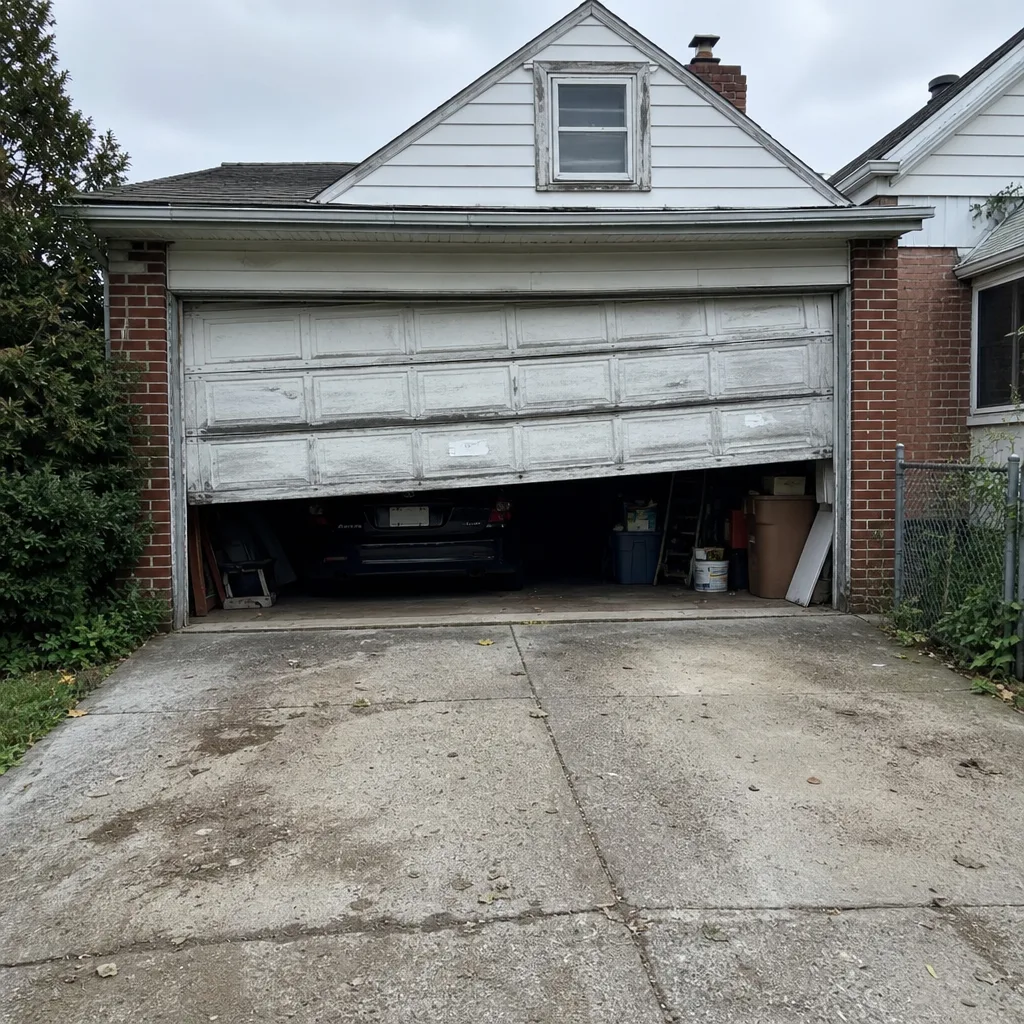 Before
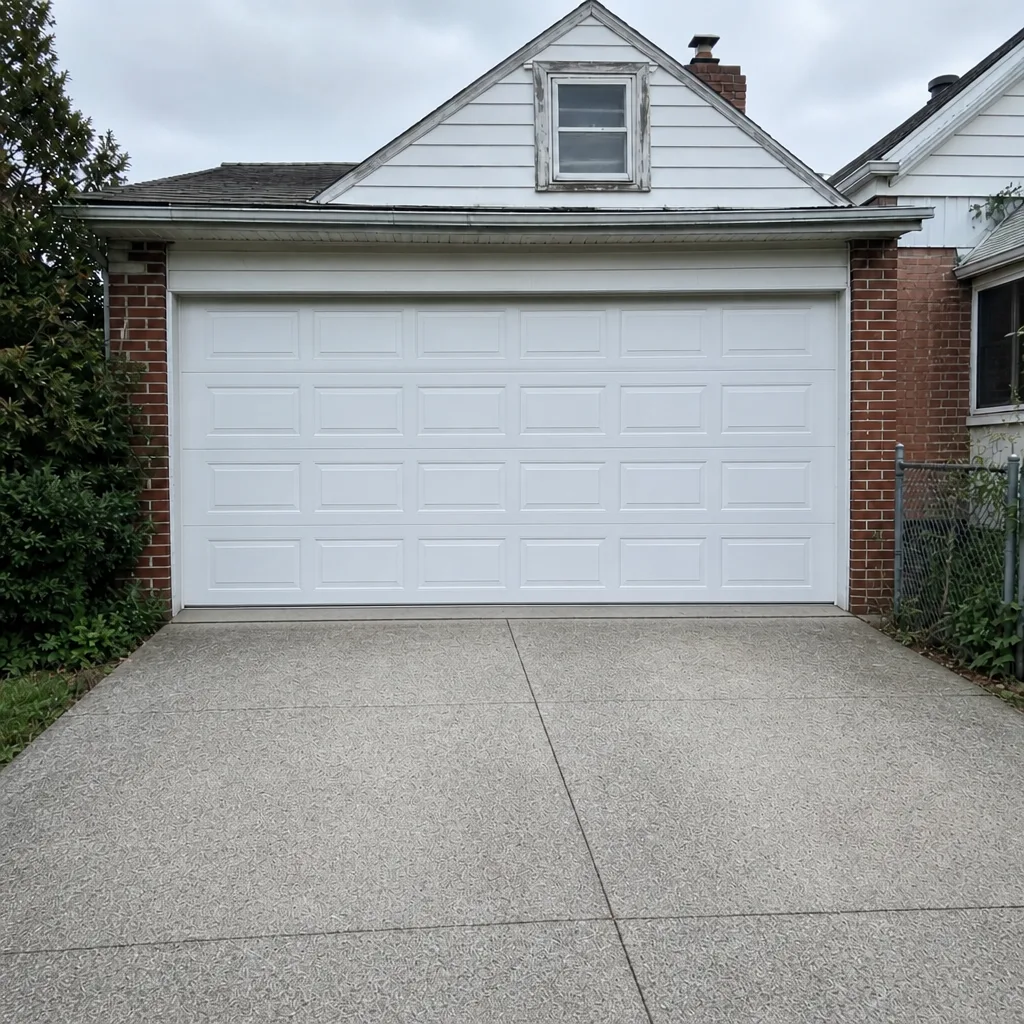 After
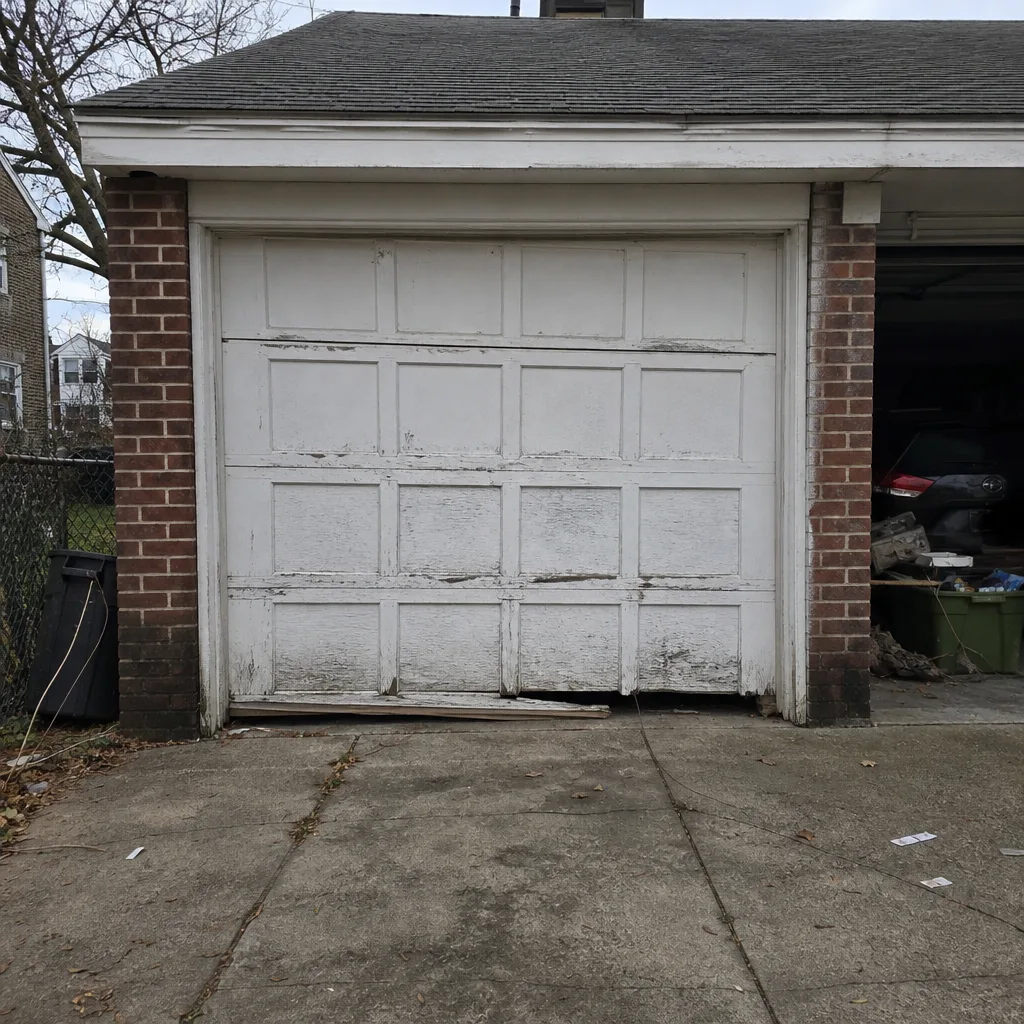 Before
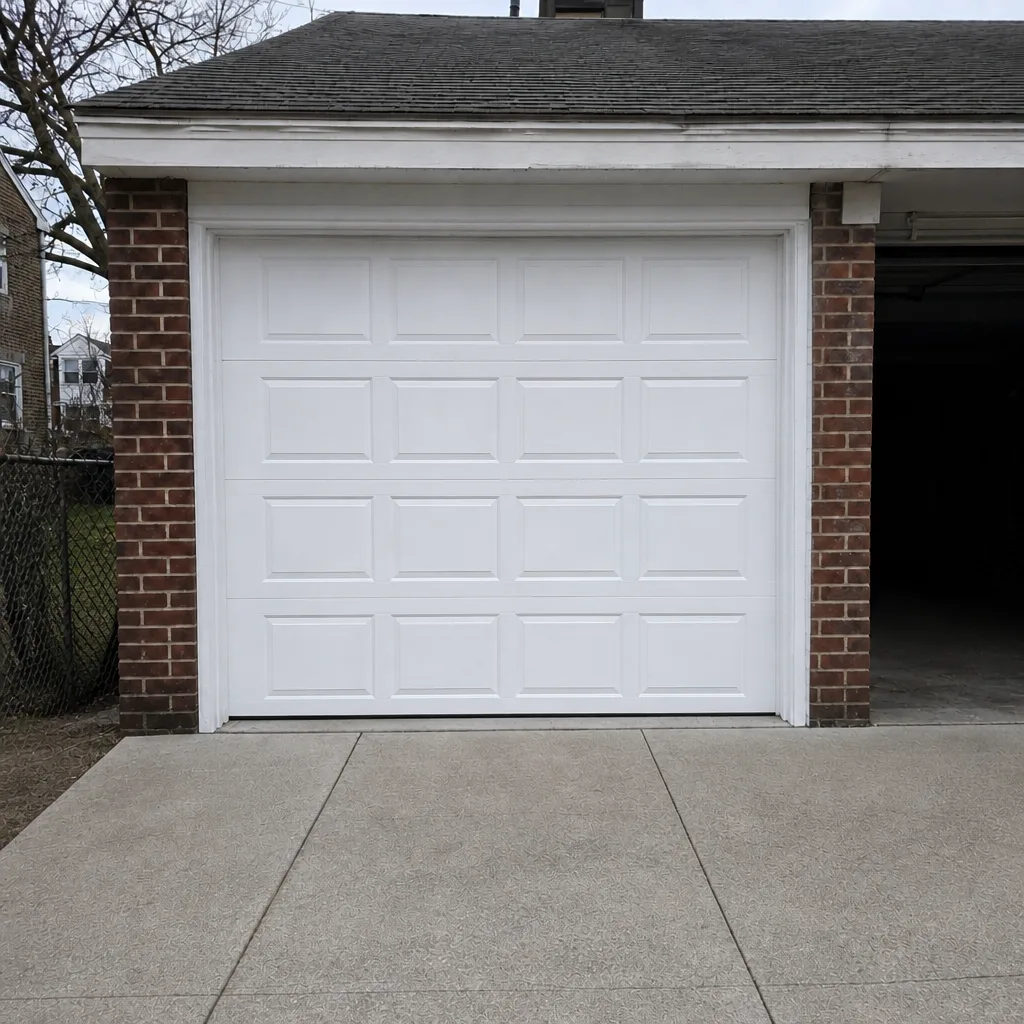 After
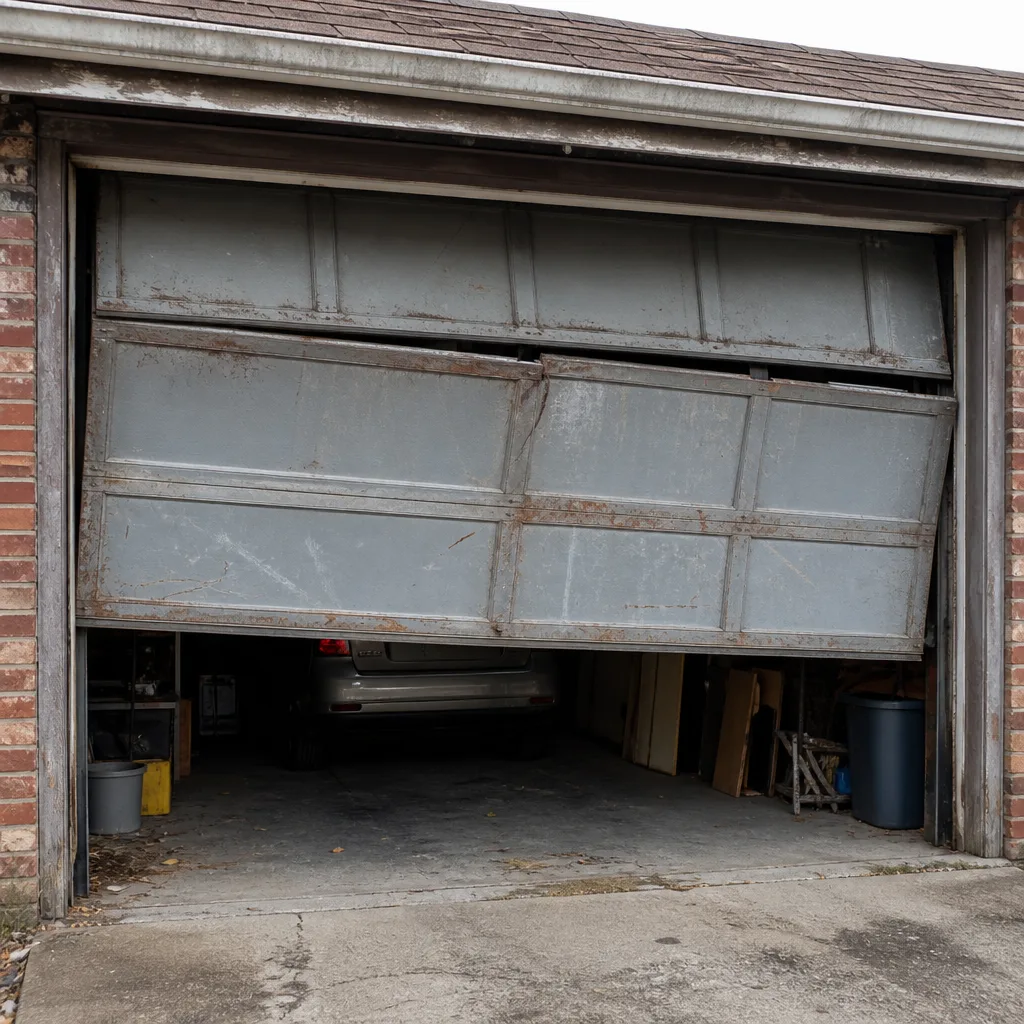 Before
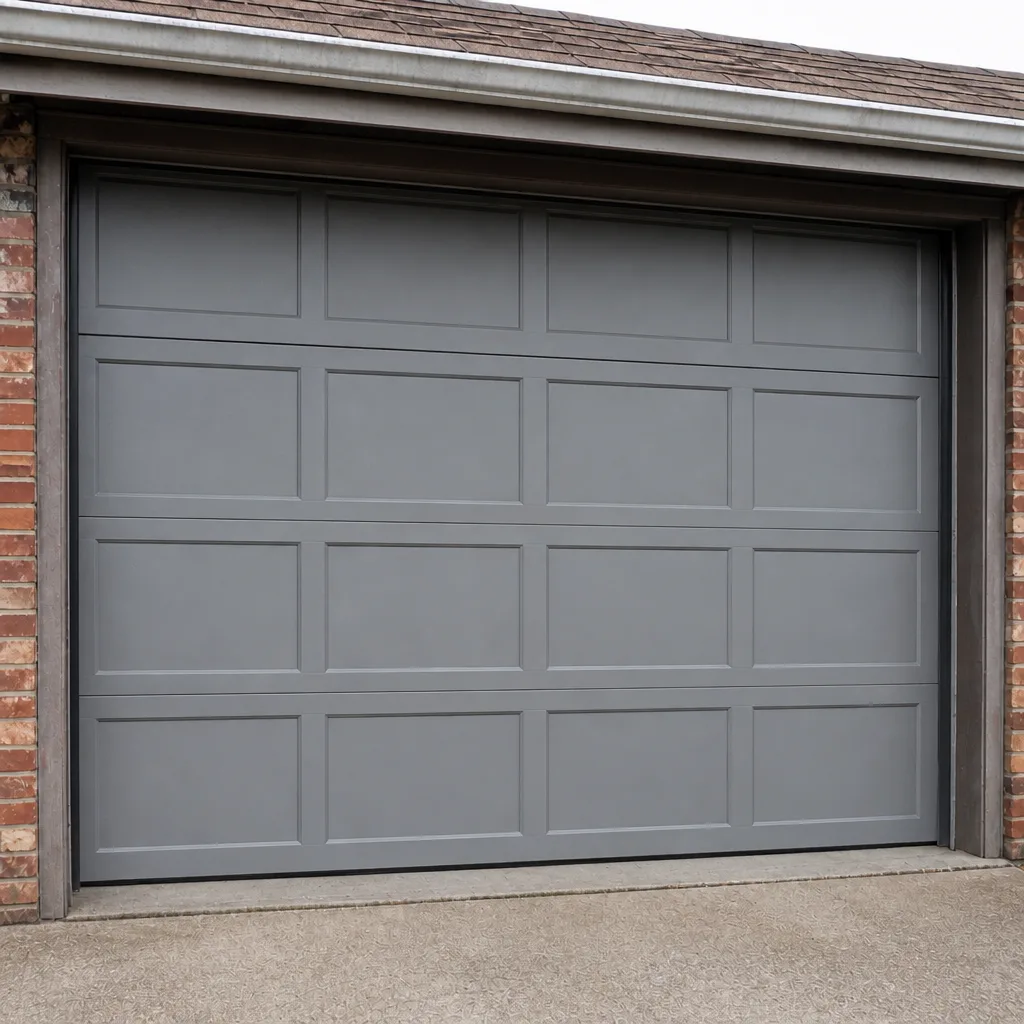 After
When to Call a Professional
Call a professional when you hear a pop or bang, when the door visibly tilts, when a cable goes slack, when the opener slows or strains, or when you can’t tell which of those is happening. That last one matters. A trained eye over a phone call or a walk-through solves most of these cases faster than a homeowner with a flashlight. Our technicians have up to 9 years of experience diagnosing these same signals across all major brands, and they can separate a cosmetic squeak from a failing spring before the door does damage to itself. Garage Door Repair Holmesburg offers free estimates in Holmesburg. Call (833) 509-3024 and describe what you’re hearing. Bring the sound, the brand, and the visual clue. The rest is our job.
Frequently Asked Questions
A sharp pop or a single loud bang, usually followed by the door feeling heavier than it did the day before, is the clearest early signal. A torsion spring under load rarely fails silently, and it usually gives two or three clear warnings in the two weeks before it snaps. If you hear a pop, stop operating the door and call a technician.
If the door moves evenly by hand and the opener alone hesitates or slows, it’s an opener problem. If the door itself resists, tilts, or drags, it’s a door problem and the opener is just reporting it. The quick test is to release the door from the opener using the red emergency handle and see how it lifts by hand.
No, and this is the one warning sign we treat as non-negotiable. A slack cable means the door is being held by one side only, and running it can drop the door or twist the panels. Leave the door down, keep everyone clear of the tracks, and call (833) 509-3024. Estimates are free.
Squealing is friction, and friction changes with the season. Summer humidity swells the wooden frame so the door binds slightly, and cold winter air tightens the metal tracks. A squeal that appears for a week or two at a season change is usually a lubrication-and-adjustment visit; one that lasts all season is usually a worn roller or a hinge that needs replacement.
Calls we see range from a lubrication-and-tune visit for a squeal to spring replacement when a pop has announced a failure. We don’t quote a single range for every job because the work depends on which part failed, the door’s brand, and the panel condition. Call us for a free estimate; we quote and agree on the price before any work starts, and the written estimate sets the final price.
The local pro is licensed and insured as Pennsylvania requires, and every technician we connect you with is trained specifically on garage doors, including spring, opener, and full installation work. If a repair reveals the door is past saving, the same team handles the full replacement so you don’t need a second company.
The Bottom Line
Your garage door is talking to you long before it fails. A grinding roller, a popping spring, a squealing hinge, an uneven lift, and an opener that’s lost its rhythm are all specific warnings, and each one points to a specific component. The homeowners who do best in Holmesburg are the ones who learn the language early, treat a pop or a slack cable as a stop signal, and call for a professional before a scheduled repair becomes a weekend emergency. If you can describe what you’re hearing, we can tell you what to do next. Free estimates, and the price is agreed before any work starts.
Written by the team at Garage Door Repair Holmesburg.